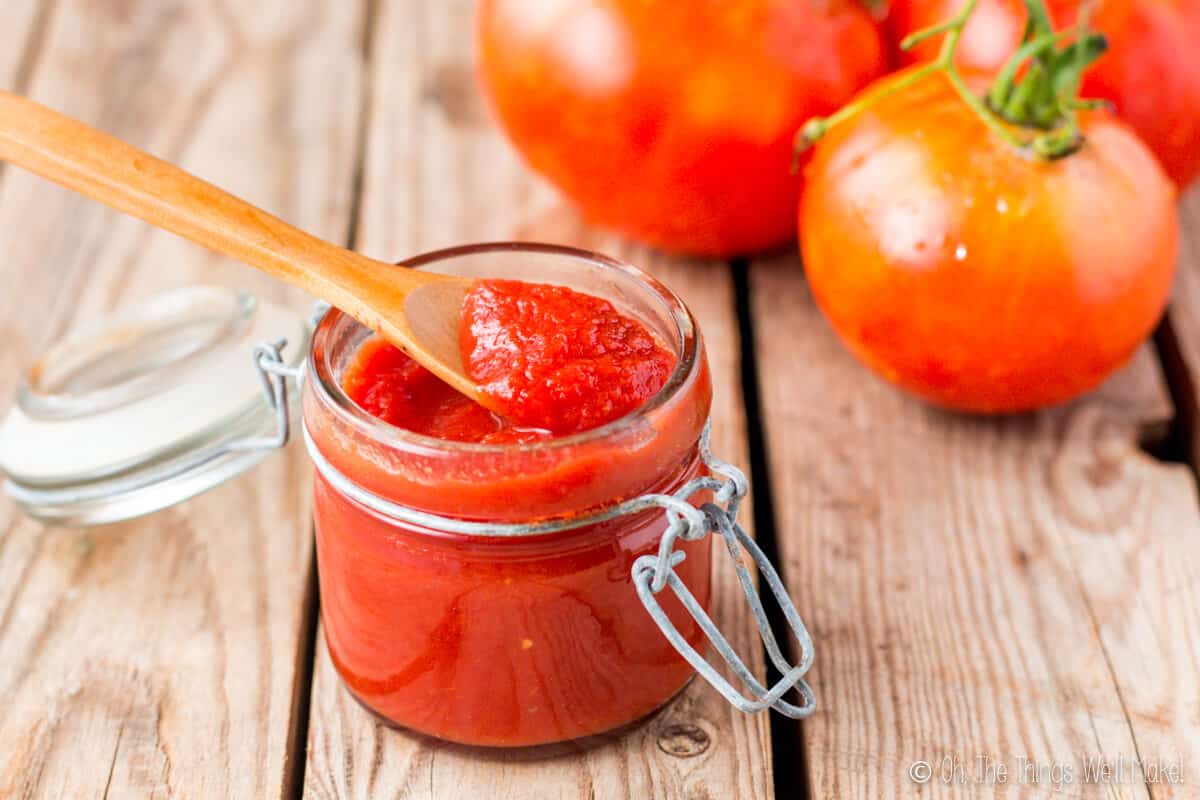
Unlock Rich Flavor: Easy 3-Ingredient Homemade Tomato Paste
Imagine a kitchen staple so potent, so bursting with concentrated flavor, that it transforms ordinary dishes into culinary masterpieces. Now, imagine creating this magic yourself, with just three simple ingredients and a touch of patience. We're talking about homemade tomato paste – a game-changer that will make you wonder why you ever settled for store-bought versions. If you've ever asked yourself how to make tomato paste that truly elevates your cooking, you're in the right place. Growing up, many of us fondly remember grandmothers and family elders meticulously transforming garden harvests into jars of deep, brick-red goodness. This tradition, steeped in flavor and love, is incredibly easy to revive in your own kitchen. Our recipe simplifies the process down to its essence, ensuring even novice cooks can achieve a rich, vibrant paste that’s perfect for everything from robust pasta sauces to hearty stews. Get ready to experience a depth of flavor that a can simply can't deliver!Why Homemade Tomato Paste is a Culinary Game-Changer
Before we dive into the steps of how to make tomato paste from scratch, let's explore why this homemade version is undeniably superior and worth the effort: * Unrivaled Flavor Depth: This is the primary reason. Homemade tomato paste boasts an intensity and sweetness that store-bought varieties struggle to match. The slow reduction process concentrates the tomatoes' natural sugars and umami, resulting in a complex, rich flavor profile without any metallic aftertaste often associated with canned goods. It's the difference between a whisper of tomato and a resonant chorus. * Ingredient Control: When you make it yourself, you dictate what goes in. Choose organic, ripe tomatoes, high-quality olive oil, and skip all the unnecessary fillers, preservatives, and added sugars that can be found in commercial products. This control not only contributes to better flavor but also a healthier product for your family. * Cost-Effective & Sustainable: If you're a gardener with a bumper crop of tomatoes or can purchase them in bulk when they're in season and affordable, making your own paste is incredibly economical. It's also an excellent way to preserve summer's bounty and reduce food waste. * The Joy of Creation: There's immense satisfaction in crafting a fundamental ingredient from scratch. Knowing you've produced such a versatile and flavorful component for your cooking adds a special touch to every dish you prepare. It’s carrying on a valuable culinary tradition.The Simple 3-Ingredient Recipe: A Step-by-Step Guide
Our quest to reveal how to make tomato paste begins with a surprisingly short ingredient list: fresh tomatoes, a touch of olive oil, and for an optional but recommended aromatic layer, bay leaves. What You'll Need: * Large pot or Dutch oven * Food mill or blender and fine-mesh sieve * Wooden spoon or heat-resistant spatula * Sterilized jars or freezer-safe containers for storage Ingredients: * Fresh, ripe tomatoes (preferably paste varieties like Roma or San Marzano for lower water content) * Olive oil * Bay leaves (optional, but highly recommended for added depth)- Prepare Your Tomatoes: Begin by thoroughly washing your fresh tomatoes. There’s no need for blanching or peeling at this stage. Simply core and roughly chop them into quarters or eighths, depending on their size. The more surface area, the quicker they'll soften.
- Initial Cook & Soften: In your large pot, heat a tablespoon or two of olive oil over medium heat. Add the chopped tomatoes to the pot. Cover and simmer for approximately 20-30 minutes, stirring occasionally. The goal here is to soften the tomatoes completely, allowing them to release their juices.
- Remove Skins and Seeds: This is where the magic of texture begins.
- Using a Food Mill: For the smoothest, most efficient separation, pass the cooked tomatoes through a food mill. This device effortlessly separates the pulp from the skins and seeds, leaving you with a silky-smooth puree.
- Using a Blender and Sieve: If you don't have a food mill, a blender works too. Blend the cooked tomatoes until smooth. Then, pass the blended mixture through a fine-mesh sieve, using the back of a spoon to press out all the liquid and pulp. Discard the remaining skins and seeds.
- Reduce to a Concentrated Paste: Return the smooth tomato puree to your clean pot. Add 2-3 bay leaves to the pot (if using). Now, the true art of making paste unfolds. Simmer the puree on *very low* heat for 1.5 to 2 hours, or even longer, depending on your desired consistency and the water content of your tomatoes.
Key to Success: Low and Slow! This reduction phase is crucial. The goal is to evaporate the water content, concentrating the tomato solids and intensifying their flavor. Stir frequently, especially as the mixture thickens, to prevent it from sticking to the bottom and burning. If you notice it bubbling too vigorously, reduce the heat further. The paste is ready when it reaches a thick, brick-red consistency, holding its shape on a spoon.
For a deeper dive into the nuances of this process, check out our companion article: Homemade Tomato Paste: Your Essential Step-by-Step Guide.
Mastering Tomato Paste Preservation: Storage Options
Once you’ve perfected your rich, homemade tomato paste, the next step is to preserve its goodness. You have two excellent options for storing your culinary treasure, ensuring you always have concentrated tomato flavor on hand.Freezing for Portion Control
Freezing is arguably the easiest and most flexible method for storing homemade tomato paste, especially if you want convenient, pre-portioned amounts for everyday cooking.
- Using Molds: Silicone molds (like ice cube trays, brownie molds, or specialized freezer molds) are ideal. Spoon or pipe the cooled tomato paste into each cavity. Silicone is excellent because it allows for easy release once frozen. Each standard ice cube cavity typically holds about 1 tablespoon of paste, which is a common measurement in recipes.
- Without Molds: No special molds? No problem! Line a baking sheet with parchment paper or a silicone baking mat. Using a spoon or a piping bag (a resealable plastic bag with a corner snipped off works perfectly), drop 1-tablespoon portions of tomato paste onto the sheet.
- Freeze Solid: Place the mold or baking sheet in the freezer until the paste portions are completely solid.
- Transfer and Store: Once frozen, pop the individual portions out of the mold or peel them off the parchment paper. Transfer these frozen "pucks" or "blobs" into an airtight container or a freezer-safe bag. Label with the date. Your homemade tomato paste will keep beautifully in the freezer for up to 6-8 months, ready to be dropped straight into your simmering dishes.
Canning for Shelf-Stable Goodness
For those who prefer a pantry-stable option and have experience with home canning, preserving your tomato paste in sterilized jars is a fantastic choice. This method ensures your paste is ready to use without needing freezer space.
- Prepare Jars: Sterilize pint or half-pint canning jars and lids according to standard canning practices.
- Fill Jars: Carefully ladle the hot, freshly made tomato paste into the sterilized jars, leaving appropriate headspace (usually 1/2 inch).
- Process: Process the jars in a boiling water bath canner for the recommended time (typically 15-20 minutes for half-pints, adjusted for altitude). Always refer to reliable canning guidelines for precise times and safety procedures.
- Cool and Store: Allow the jars to cool completely and check for proper seals. Store sealed jars in a cool, dark pantry.
Regardless of your chosen method, proper storage is key to enjoying your homemade tomato paste for months to come. For more in-depth guidance on extending the life of your garden's bounty, read our article: Preserve Garden Tomatoes: Make Superior Homemade Tomato Paste.
Beyond the Basics: Tips, Tricks, and Culinary Uses
Once you master how to make tomato paste, a world of flavor opens up. Here are some extra tips and ideas to maximize its potential: * Flavor Boosters: While our recipe is simple, you can experiment! A pinch of sugar can help balance acidity, especially if your tomatoes are on the tart side. A splash of red wine during the reduction can add another layer of complexity. * Preventing Burning: The number one challenge during reduction is preventing the paste from sticking and burning. This is why consistent, low heat and frequent stirring are non-negotiable, particularly as it thickens. If you find it sticking, reduce the heat immediately. A heavy-bottomed pot or Dutch oven also helps distribute heat more evenly. * Yield Expectation: Remember that tomato paste is highly concentrated. A large batch of fresh tomatoes will reduce down to a surprisingly small amount of paste. For instance, 10-15 pounds of fresh tomatoes might yield only 2-3 cups of finished paste. This concentration is precisely what makes it so powerful. * What is Tomato Paste Used For? This humble ingredient is a culinary powerhouse!- Sauce Thickener: It adds body and richness to pasta sauces, especially bolognese and marinara, without adding excess liquid.
- Flavor Base: Sauté a spoonful in a bit of olive oil before adding other ingredients to develop a deep, savory foundation for soups, stews, chili, and braises. This technique, called "blooming" the paste, intensifies its flavor even further.
- Color Enhancer: A small amount can deepen the color of dishes, giving them a more appealing, robust appearance.
- Pizza & Flatbreads: It makes an excellent, concentrated base for homemade pizza sauce or as a spread on flatbreads.
- Compound Butters & Spreads: Mix a little into softened butter with herbs for a savory compound butter, or blend into dips for an extra umami kick.
